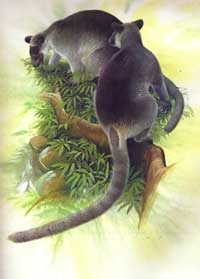
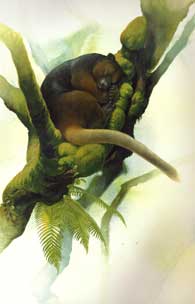
Tree Kangaroos

Fourteen species. One mountain range with three.

Tree kangaroos — the genus Dendrolagus — are among the rarest and least-known mammals on Earth. The Torricelli is the only place where three species live side by side.

There are 14 species of Dendrolagus — two in the rainforests of far north Queensland, and twelve on the island of New Guinea.

Tree kangaroos are macropods that returned to the trees: stocky, long-tailed climbers of the rainforest canopy. Almost every species is hunted, and there have been many local extinctions across New Guinea. The Torricelli Mountain Range is unique — the only place on Earth known to hold three species at once: the Tenkile, the Weimang, and the Grizzled. The Tenkile and Weimang are among the most threatened mammals in Papua New Guinea, and saving them is where TCA began.

14
species of Dendrolagus
12
found on New Guinea
3
coexisting in the Torricelli
2
in Australia

Help us protect them.

Every contribution supports TCA’s vision — that the people of PNG value and protect their natural resources, their community, and their culture.

01

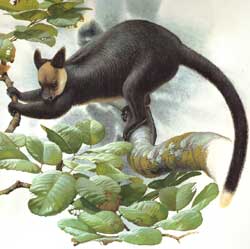
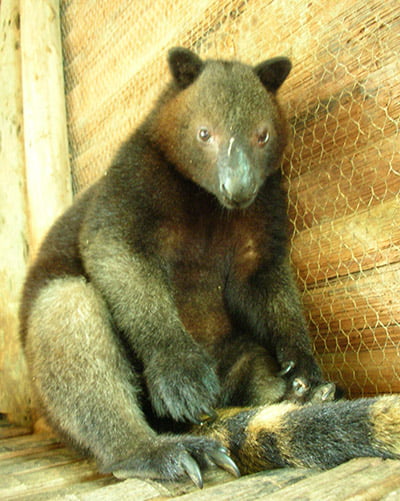
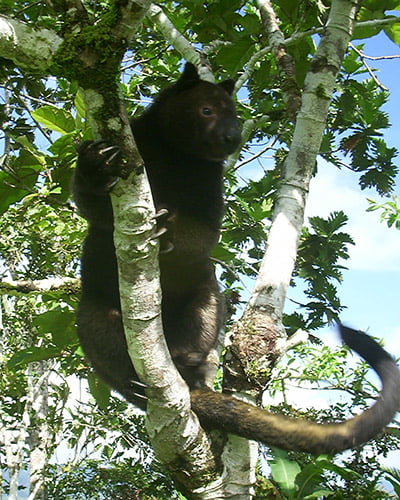
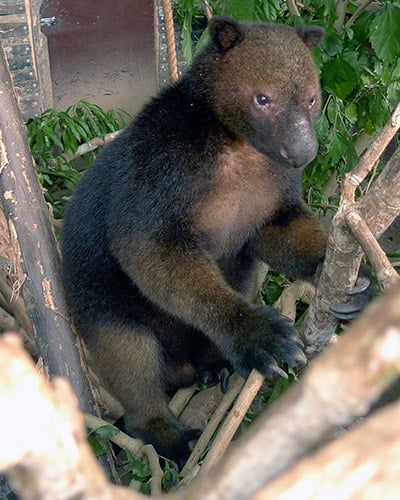
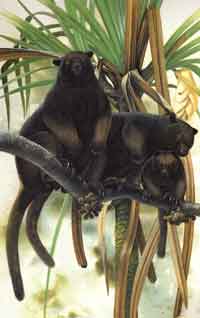
Tenkile Tree KangarooDendrolagus scottae

Critically Endangered
Tenkile tree kangaroo Tenkile tree kangaroo Tenkile tree kangaroo

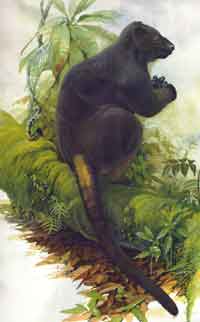
Black fur with a distinctive hair whorl on the shoulders.

  • Males11.5 kg avg
  • Females9.5 kg avg
  • Elevation900–1,700 m
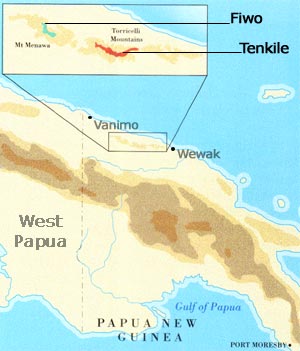
  • Range~125 km², endemic to the Torricelli
  • DietVines, ferns and leaves

Local names: Tenkile (Olo), Rengile (One), Teklel (Elke), Tikisir (Yel)

The Tenkile is found only in the Torricelli Mountain Range, in mid-montane rainforest above 900 m. First described by Tim Flannery in 1989, its population may have fallen to around 100 animals by the time TCA formed in 2001 — making it one of the world's most endangered mammals. Hunting pressure from a tripled human population drove the decline; under TCA's moratorium it has since climbed past 300.

More about the TenkileShow less
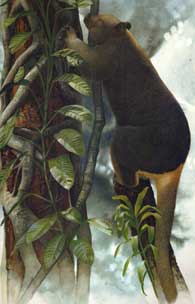
Illustration — Peter Schouten
Distribution map
Distribution map
Illustration — Peter Schouten

A second subspecies, the Fiwo, lives in the adjacent Bewani Mountains and is smaller and less threatened. Illustrations by Peter Schouten.

02

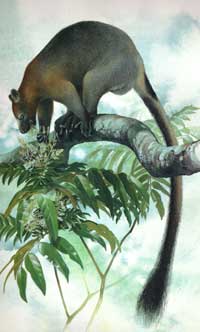
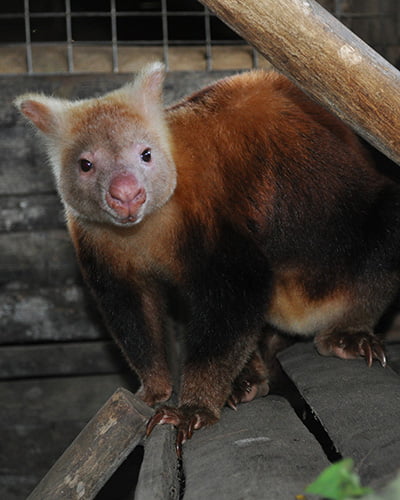
Weimang Tree KangarooDendrolagus pulcherrimus

Critically Endangered
Weimang tree kangaroo Weimang tree kangaroo Weimang tree kangaroo

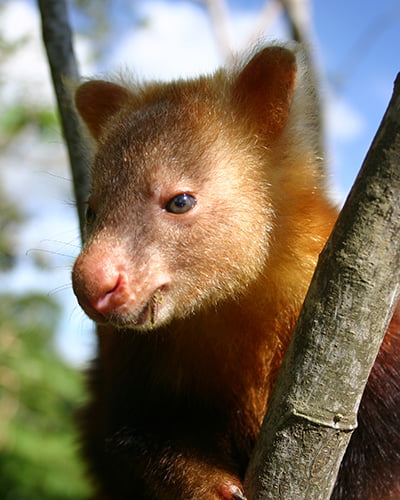
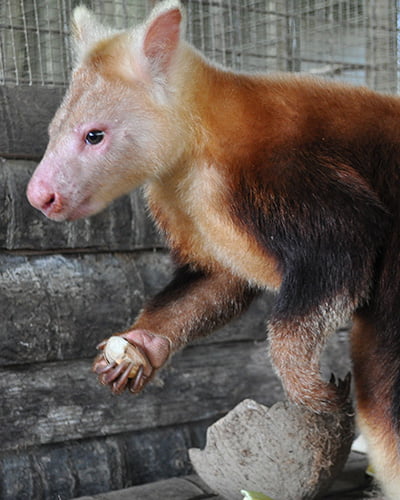
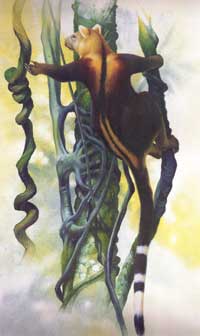
Golden shoulders, white ears and face, white rings on the tail, and a richly burgundy back — like a Goodfellow's, but white-faced.

  • Males6.2 kg
  • Females7.0 kg
  • Elevation680–1,700 m
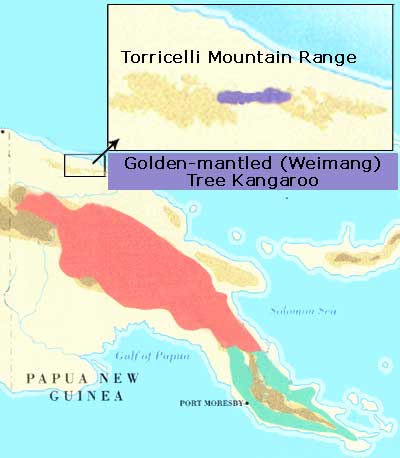
  • Range~250 km², eastern Torricelli + Foja Mtns
  • DietLittle known

Local names: Weimangke (Olo), Oumak (Yil), Weimang (Alu), Wimang (Arop)

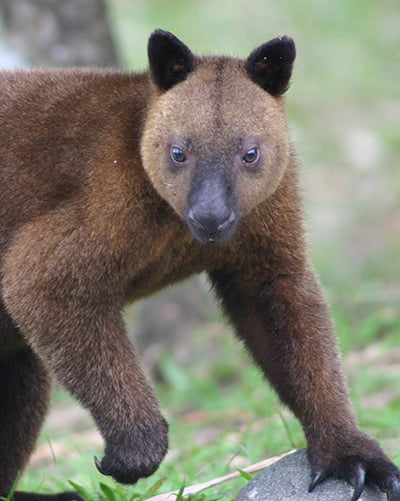
The Golden-mantled, or Weimang, survives only at the eastern end of the Torricelli and in the Foja Mountains of West Papua — a fraction of its former range. The smallest member of the Goodfellow's complex, it owns habitat across about 30 villages. TCA has cared for Weimang since 2006 and runs a hunting moratorium across its villages; it is thought less threatened than the Tenkile thanks to a wider range and lower human density.

More about the WeimangShow less
Illustration — Peter Schouten
Distribution map
Distribution map

Bred in captivity at TCA Base-Lumi. Illustrations by Peter Schouten.

03

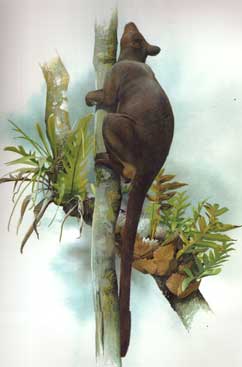
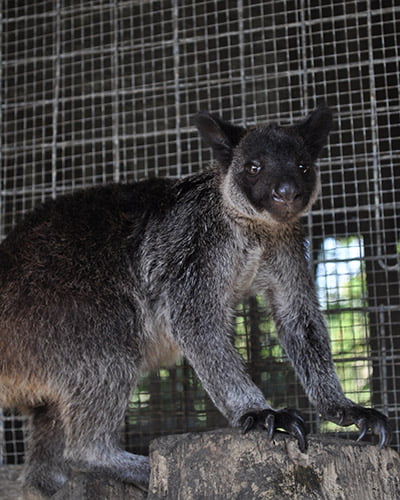
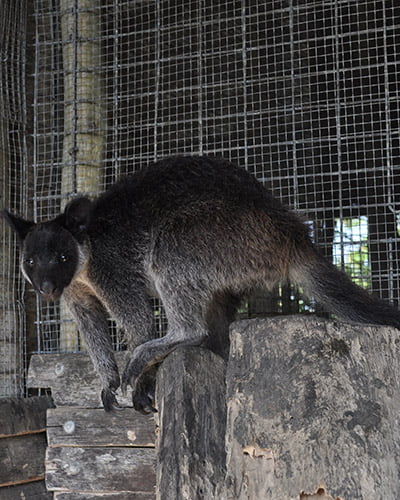
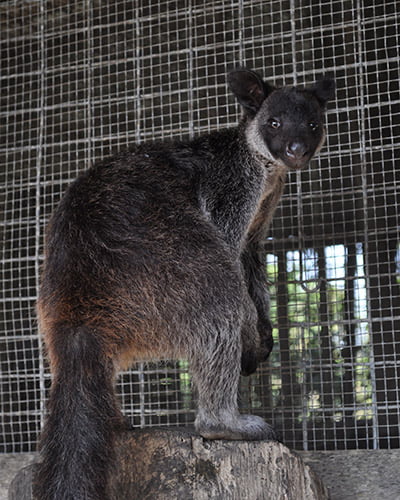
Grizzled Tree KangarooDendrolagus inustus

Vulnerable
Grizzled tree kangaroo Grizzled tree kangaroo Grizzled tree kangaroo

Distinct grey colouring with black ears, back and face, and a long, sometimes fluffy tail. Part of the long-footed complex.

  • Males15.5 kg avg
  • Females11.4 kg avg
  • Elevation100–1,400 m
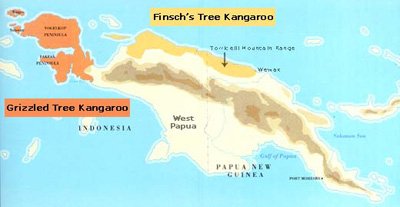
  • RangeNorth-coast ranges, Wewak to the Vogelkop
  • DietLeaves of many plants

Local names: Yongi / Marengi (Olo), Yargal (Yil), Wakera (Lobo Bay)

The Grizzled is the largest of all tree kangaroos, with males reaching 17 kg. It ranges widely across the north-coast ranges of New Guinea and is the third of the Torricelli's three species. Heavily hunted across its range, it is held back from greater threat only by its wide distribution. Since TCA's 2006 moratorium, villagers have reported it returning to land it had been absent from for over 20 years.

More about the GrizzledShow less
Illustration — Peter Schouten
Distribution map
Distribution map
Illustration — Peter Schouten

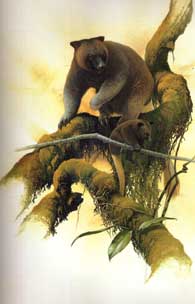
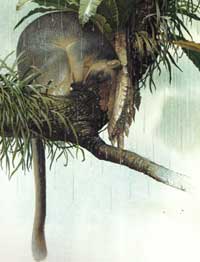
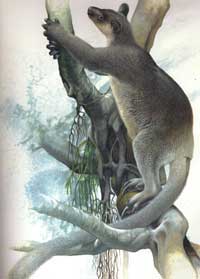
Two subspecies: the grey-faced D. i. inustus of West Papua, and the black-faced Finsch's (D. i. finschi) of the Torricelli — to our knowledge the only tree kangaroo to raise twins. Illustrations by Peter Schouten.

The wider family

Eleven more tree kangaroos

The other eleven species of Dendrolagus, from the heaviest of all — the Grizzled's relatives — to the tiny Lumholtz's of Queensland. Many are known from only a handful of animals. Illustrations by Peter Schouten.

Wondiwoi tree kangaroo illustration
Critically Endangered

Wondiwoi Tree KangarooDendrolagus mayri

Blackish fur frosted with yellow, silver-tipped at certain angles, with reddish rump and limbs and an almost-white tail.

  • Males9.25 kg (one specimen)
  • Elevation~1,600 m
  • RangeWondiwoi Peninsula, ~300 km²

One of the most poorly known mammals on Earth — not recorded since 1928, and then from a single male. It may already be extinct; if it survives, perhaps only 50 animals remain. Hunting and mica mining on the Wondiwoi Peninsula both threaten it.
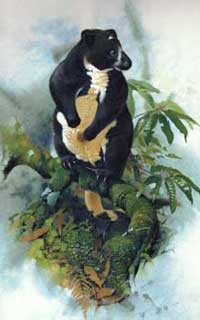
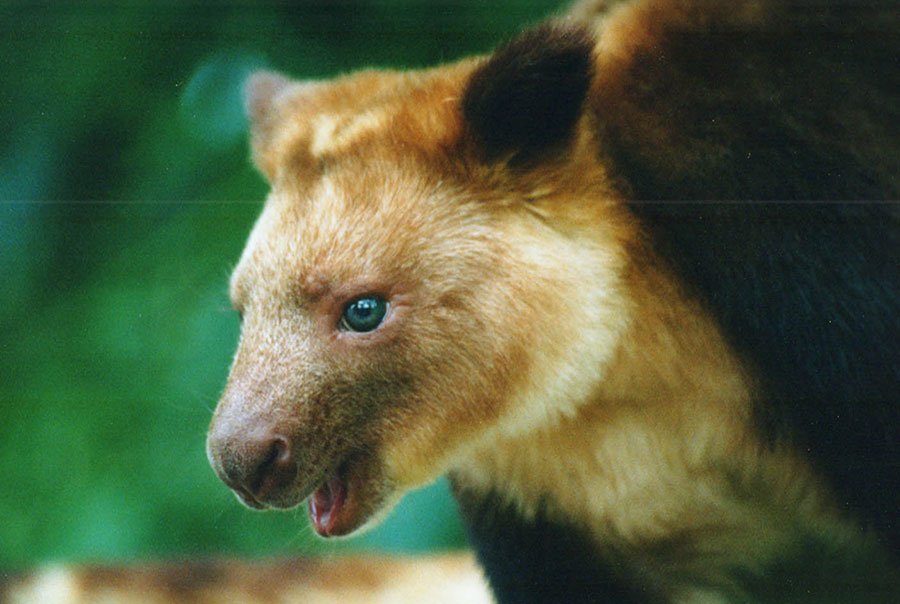
Dingiso tree kangaroo illustration
Endangered

Dingiso Tree KangarooDendrolagus mbaiso

Striking black-and-white markings — white stripes either side of the muzzle and a white star on the forehead — over a thick coat for high-altitude life.

  • Females8–9 kg
  • Elevation2,700–3,500 m
  • RangeTembagapura & Kwiyawagi, ~4,000 km²

A large, mostly black subalpine tree kangaroo of West Papua, only described by Tim Flannery in 1995. In parts of its range the Moni people revere it and will not hunt it — a traditional belief that has helped protect it where habitat loss and hunting press elsewhere.

Goodfellow's tree kangaroo
Endangered

Goodfellow's Tree KangarooDendrolagus goodfellowi

Brownish-red, with two golden stripes running from the base of its red-and-gold ringed tail at least halfway up the back.

  • Males7.9 kg
  • Females8.2 kg
  • Elevation680–2,865 m
  • RangeAlotau through the Central Cordillera

One of the most striking tree kangaroos, widespread across New Guinea and familiar from zoos worldwide. Often seen in pairs — unusual among tree kangaroos. Hunting pressure in the centre of its range has pushed it to Endangered.

Ifola tree kangaroo illustration
Endangered

Ifola Tree KangarooDendrolagus notatus

Very dark chocolate-brown coat with yellow rings around the tail base, silvery-tipped hairs over the back and limbs, and a black-and-yellow tail.

  • Males8.2 kg
  • Females6.3 kg
  • Elevation900–3,100 m
  • RangeCentral highlands, ~40,000 km²

The Ifola has the largest potential range of any tree kangaroo — but it lives in one of the most densely populated regions on Earth, where it is prized for food and bride-price and has been hunted out of much of its range. It survives in several protected areas.

Matschie's tree kangaroo illustration
Endangered

Matschie's Tree KangarooDendrolagus matschiei

Reddish-brown with a golden-yellow tail, belly, feet, nose and ear-tips, a short tail, and variable white facial markings unique to each individual.

  • Males9 kg
  • Females9 kg
  • Elevation1,000–3,300 m
  • RangeHuon Peninsula only, ~5,000 km²

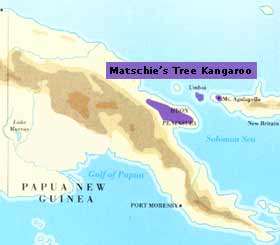
The classic 'zoo' tree kangaroo, found only on the Huon Peninsula. Each animal's facial markings are unique. It is the focus of long-running work by the Tree Kangaroo Conservation Project, which has secured a Conservation Area across much of its range.

Doria's tree kangaroo
Vulnerable

Doria's Tree KangarooDendrolagus dorianus

Sombre brown fur lacking silver tipping, and more strongly adapted for arboreal life than other tree kangaroos.

  • Males13.3 kg
  • Females10.2 kg
  • Elevation600–3,000 m
  • RangeSE New Guinea, ~15,000 km²

A large, robust, dark-brown tree kangaroo of south-eastern New Guinea's montane forests. Captive studies show it is among the most social of all macropods — living in one-male groups, with mother–daughter coalitions and at least six distinct adult vocalisations.

Seri's tree kangaroo illustration
Vulnerable

Seri's Tree KangarooDendrolagus stellarum

Part of the Doria's complex. Young animals have a bright yellow tail and very dark body; older animals darken, with silvery tips on the limbs.

  • Males9.5 kg
  • Females6.8 kg
  • Elevation2,600–3,200 m
  • RangeW & central New Guinea, ~30,000 km²

A tree kangaroo of high mossy alpine forest in the west and centre of New Guinea, found solitary or as females with young. Little is known of its biology, and it has declined in parts of its range.

Vogelkop tree kangaroo illustration
Vulnerable

Vogelkop Tree KangarooDendrolagus ursinus

A black back with a pale belly, pale-to-reddish cheeks, tufted ears, and a white tail tip.

  • WeightUnrecorded
  • Elevation0–2,500 m
  • RangeVogelkop & Fak Fak peninsulas, ~30,000 km²

One of the first tree kangaroos ever described, yet still barely studied — there is no reliable weight data for the species. Restricted to the far west of New Guinea, it is thought to have lost about 30% of its population over the last three generations.

Bennett's tree kangaroo illustration
Near Threatened

Bennett's Tree KangarooDendrolagus bennettianus

Black chest, belly and under-tail with a brown-grey back and limbs — a reversal of the usual mammal pattern, thought to camouflage it when seen from below.

  • Males13 kg
  • Females10 kg
  • Elevation0–1,400 m
  • RangeFar north Queensland, <2,000 km²

One of only two tree kangaroos found in Australia, in the rainforests of far north Queensland. Males defend large territories overlapping those of two or three females. With Aboriginal hunting now ceased and its range inside a World Heritage area, its numbers have recovered, though habitat quality is declining.

Lowland tree kangaroo illustration
Least Concern

Lowland Tree KangarooDendrolagus spadix

Uniform reddish-brown with a sparse, short coat, a paler belly, and a notably long tail.

  • Males7–9 kg
  • Elevation0–800 m
  • RangePapuan Plateau lowlands, ~20,000 km²

The only true lowland tree kangaroo, living in swampy rainforest of the Gulf and Western Provinces. Known from only seven animals, it is buffered from hunting by the region's low population and inhospitable limestone country — though logging and oil-palm proposals loom.

Lumholtz's tree kangaroo illustration
Least Concern

Lumholtz's Tree KangarooDendrolagus lumholtzi

A cream chest and belly, black feet, and a grey back with black-tipped fur. The smallest of all tree kangaroos.

  • Males7.2 kg
  • Females5.9 kg
  • Elevation300–1,600 m
  • RangeFar north Queensland, ~5,500 km²

The second Australian species and the smallest tree kangaroo of all. Its compact home range lets it live at high densities, and it has rebounded in Queensland's rainforests since Aboriginal hunting ceased — though individuals are still vulnerable to dogs and cars when crossing open ground.

Proudly supported by

Our partners

Rainforest Trust
Hans Wilsdorf Foundation
Fondation Segre
CEPA
Rostock Zoo
Belfast Zoo
Zoo Krefeld
ACNC Registered Charity
Perth Zoo
IUCN
BIOPAMA
ACP
European Union
BirdLife International
Tierpark Berlin
Zoo Frankfurt

Help us protect them.

Every contribution supports TCA’s vision — that the people of PNG value and protect their natural resources, their community, and their culture.